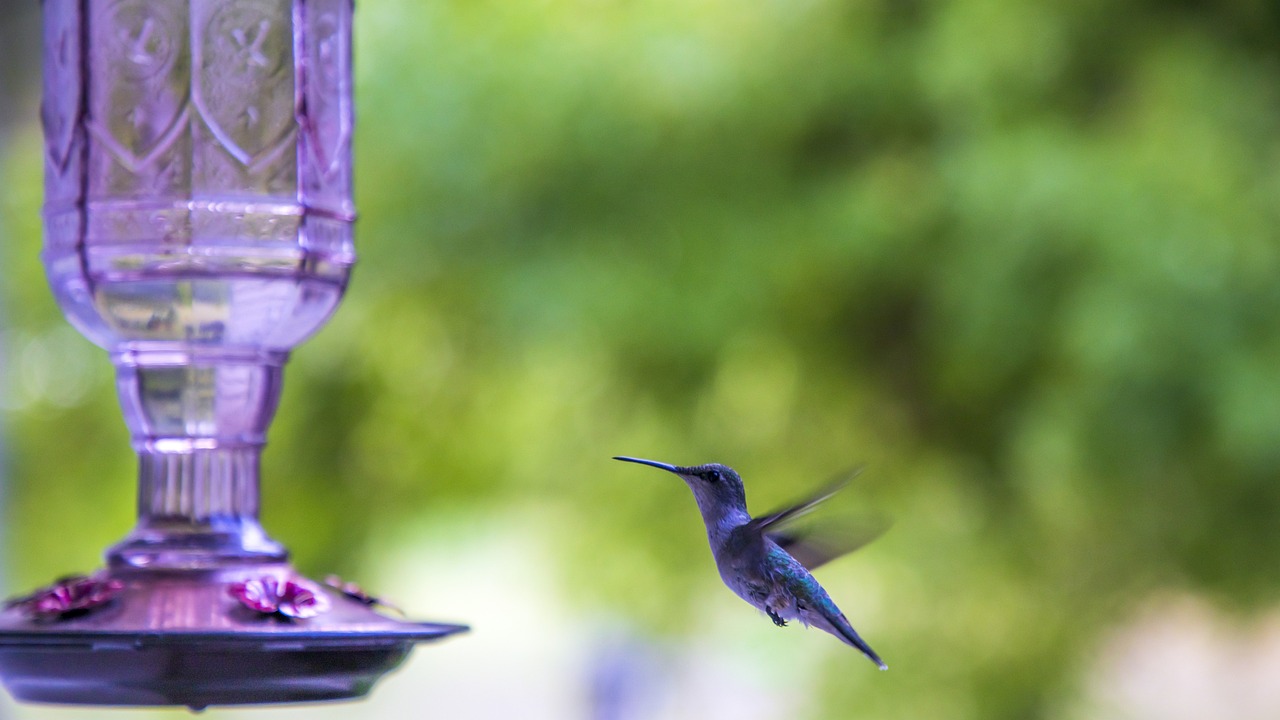
A hummingbird feeder in Central Florida in July needs cleaning every two days. That is not a cautious recommendation, it is what the temperature does to a sugar solution sitting in the sun. Nectar that has started to ferment produces alcohol and grows mould, and both are genuinely dangerous to a bird that weighs about as much as a nickel.
The good news is that a feeder designed to be cleaned takes about ninety seconds. A feeder that was not takes ten minutes, which is why most people quietly stop doing it.
The interval, by temperature
Below about seventy-five degrees you have roughly four to five days. Between seventy-five and eighty-five, two to three. Above eighty-five, or anywhere in direct afternoon sun, change it every other day and do not stretch it. Those are the numbers we give people and they hold up across a Central Florida year.
A shaded position buys you a day, sometimes two, which is a substantial saving over a season. It is the cheapest improvement available and it costs nothing but the choice of hook.
What black specks mean
Small black dots inside the reservoir or around the ports are mould, not dirt. Once they are visible the colony is well established, and rinsing will not remove it because the growth is in the surface texture of the plastic or in the threads.
This is the point at which a feeder needs scrubbing rather than rinsing. If the black specks return within a day or two of a proper clean, the surface has been colonised deeply enough that replacement is the honest answer, particularly for plastic.
Hot water first, vinegar when needed
For a routine change, hot water and a bottle brush are enough. The residue you are removing is sugar, and sugar dissolves. Most of the work is mechanical: getting a brush into the reservoir and something narrow into each port.
For mould, a solution of one part white vinegar to four parts water, left to stand for an hour, does what detergent does without leaving anything behind that a bird will drink. Detergent is effective but needs very thorough rinsing, and incomplete rinsing is a real risk with a narrow bottle.
Never use bleach on a feeder you will refill the same day
Diluted bleach is sometimes recommended and it does kill mould thoroughly. The problem is the rinse: bleach residue in a threaded neck or a silicone port is difficult to remove completely and you cannot see whether you have succeeded.
If you use it at all, use it on a feeder you are then taking out of service for a day, and rinse far past the point where you think it is done. Vinegar is the safer default for a feeder going straight back on the hook.
The tools that make it a two-minute job
A narrow bottle brush that reaches the bottom of the reservoir, and a set of small port brushes or pipe cleaners. That is the whole kit. Without a port brush you are rinsing the reservoir and leaving the part the bird actually touches untouched.
A dish rack or a folded towel to dry on matters more than people expect. A feeder reassembled wet traps water in the threads and starts the next batch off with a head start on fermentation.
Design decides whether you keep it up
This is the honest reason we stock what we stock. A saucer feeder separates into two open pieces and both can be wiped in seconds. A wide-mouth glass bottle takes a brush comfortably. A narrow-necked decorative bottle with fixed internal parts cannot be cleaned properly by anyone, however conscientious.
If you have a feeder you dread cleaning, you will clean it less often, and less often in a Florida summer means not really at all. Choosing for access is choosing for the birds.
From our shelves
Saucer feeders are the easiest shape to keep up with. These are the ones in stock. Everything below is in stock as this piece is published, and the prices shown are read live from the catalogue rather than typed into the article, so they cannot drift out of date. Across the whole group prices currently run from $13.99 to $14.99, and the listing pages carry the full specification for each one.
- eWonLife 2-Pack 16 oz Saucer Hummingbird Feeders, Built-in Ant Moat, Pure Red — $14.99
Attract vibrant hummingbirds to your garden with this 2-pack of eWonLife 16 oz saucer feeders. Featuring bee-proof ports, a built-in ant moat, and an easy-clean design, these leak-proof feeders offer a delightful and low-maintenance way to enjoy nature's tiny marvels. - Kingsyard 2-Pack 16 oz Saucer Hummingbird Feeders with Ant Moats — $13.99
Attract more hummingbirds to your garden with these Kingsyard saucer feeders. Designed to be leak-proof and bee-resistant, they offer a delightful and easy-to-maintain feeding experience for both you and your feathered friends.
These are 2 of the items in Saucer Feeders; the category page lists the rest with current stock and pricing.
Ordering, delivery and returns
Orders under $49 carry a $5.99 delivery charge; at $49 and above there is none. Orders are packed in one to three business days and travel for five to ten, so plan on six to thirteen business days between placing an order and opening the box. Everything ships from Orlando, FL, to United States addresses.
If something is not right, the return window is 30 days from delivery for unused goods in their original packaging. The Shipping Policy and the Refund and Returns Policy carry the detail, and the FAQ answers the questions that come up most often.
Read next
- Hummingbird nectar: the only recipe you need
- Glass, saucer or window: choosing a feeder
- Ants, bees and wasps at the feeder
Browse everything in stock or ask us a question — we answer written enquiries within one business day.