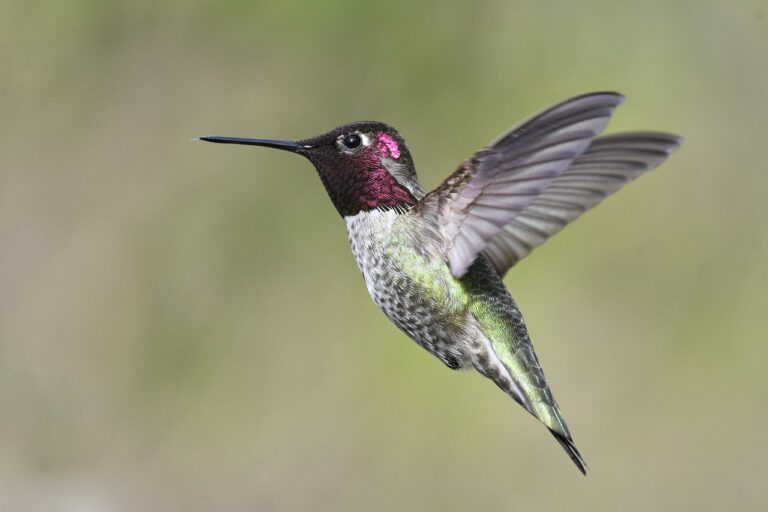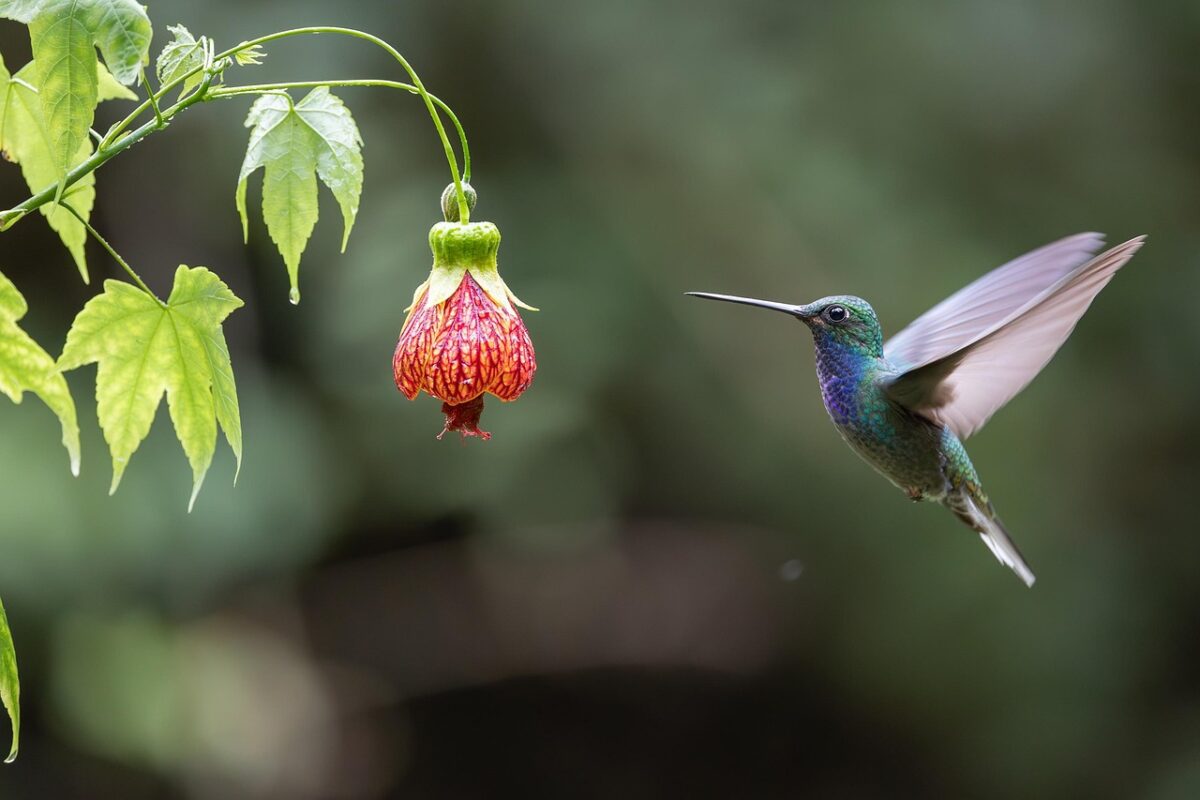
Hummingbird nectar is four parts water to one part ordinary white granulated sugar, and that is the entire recipe. It is not an approximation of something better and there is no premium version. The ratio is close to the sucrose concentration of the flowers these birds evolved to feed from, which is why it works and why deviating from it makes things worse rather than more interesting.
Almost every question we get at the counter is really a question about what else could go in. The answer is nothing, and the reasons are worth knowing because they are all different.
Why plain white sugar and nothing else
White granulated sugar is essentially pure sucrose, which is what flower nectar is. Raw sugar, turbinado and brown sugar all retain molasses, and molasses contains iron. Hummingbirds have no efficient way to excrete excess iron, and the levels in brown sugar are high enough to be a genuine problem over a season of feeding rather than a theoretical one.
Honey is worse again for a different reason. Diluted honey is an excellent growth medium for the fungus that causes a fatal tongue infection in hummingbirds, and it ferments considerably faster than sugar water in warm weather. Artificial sweeteners are simply useless: they provide no calories, and a bird that fills up on them starves while feeding.
Red dye does nothing you want
The belief that nectar must be red comes from the fact that hummingbirds are drawn to red, which is true. What they are drawn to is the feeder, not the liquid. Every feeder we sell already has red or coloured parts at the ports for exactly this reason, and that is where the bird looks.
Dye has never been shown to be beneficial and the safety of long-term consumption has never been established either way. Given that the effect you want is achieved by the feeder itself, adding an unnecessary chemical to something a bird will drink several times a day is a bad trade at any level of risk.
Boiling is about the water, not the sugar
The usual instruction is to boil the water. The purpose is not to dissolve the sugar, which dissolves perfectly well in hot tap water, but to kill organisms already present so the batch keeps longer in the refrigerator. If you are making a small amount to use immediately, hot tap water is fine.
If you do boil, let the syrup cool completely before filling a glass feeder. Pouring hot liquid into cold glass is how a bottle cracks, and it will usually crack at the neck where it is hardest to see before the leak starts.
How long a batch keeps
In a sealed container in the refrigerator, a batch keeps about two weeks. That is worth doing because making one large batch and refilling from it is far less work than mixing every other day, which is the interval a Florida summer actually demands.
In the feeder outdoors, the useful life is much shorter and depends entirely on temperature. In the shade at eighty degrees you have about two days. In direct sun in July, one. Nectar that has gone cloudy, or that has black specks in it, is already past the point where birds will use it.
Fill level matters more than feeder size
The commonest mistake with a large feeder is filling it. A thirty-two ounce bottle in a garden that gets four or five birds will ferment long before it empties, and you end up throwing away most of every fill.
Fill to whatever your birds get through in two or three days, even if that is a quarter of the bottle. The capacity is there for the peak of migration, not for everyday use. This is also the argument for keeping a small feeder alongside a large one rather than only owning the large one.
The one additive worth considering
None. There is a small industry selling nectar concentrates with added vitamins, electrolytes and preservatives, and no evidence that any of it benefits a wild bird that is also eating insects, which is where hummingbirds get their protein and micronutrients.
What does help is variety in the garden: native flowering plants alongside a feeder give birds a food source that does not depend on you remembering to refill. The feeder is a supplement, not a diet.
From our shelves
The bottles this goes into, currently on the shelf in Orlando. Everything below is in stock as this piece is published, and the prices shown are read live from the catalogue rather than typed into the article, so they cannot drift out of date. Across the whole group prices currently run from $26.99 to $39.99, and the listing pages carry the full specification for each one.
- LUJII Solar Powered Color Changing Hummingbird Feeder, Hand Blown Glass, Teal, 32 fl.oz — $39.99
Enhance your garden with the LUJII solar-powered hummingbird feeder. This beautiful, leak-proof teal glass feeder illuminates at night, attracting hummingbirds while adding a touch of elegance to your outdoor space, all with minimal environmental impact. - LUJII Hand Blown Blue Glass Hummingbird Feeder, 36 fl oz, 5 Feeding Stations — $35.99
Attract more hummingbirds to your garden with this beautiful, hand-blown blue glass feeder from LUJII. Its vibrant color and five metal feeding ports create an inviting haven for these tiny birds, while the durable design ensures lasting beauty. - NATURE'S WAY Hand Blown Red Glass Hummingbird Feeder, 16 oz — $27.44
Attract hummingbirds to your garden with this stunning NATURE'S WAY feeder. Crafted from vibrant, hand-blown red glass, it offers a comfortable perching experience and a generous 16-ounce capacity for their favorite nectar, making it a beautiful and functional addition to any outdoor space. - LaElvish Garden 34oz Hand-Blown Floral Balloon Hummingbird Feeder for Outdoors — $26.99
Attract hummingbirds to your garden with this stunning LaElvish Garden hand-blown glass feeder. Its vibrant floral design and leakproof construction make it a perfect, safe, and beautiful addition to any outdoor space, delighting both birds and observers.
These are 4 of the items in Glass Feeders; the category page lists the rest with current stock and pricing.
Ordering, delivery and returns
Orders under $49 carry a $5.99 delivery charge; at $49 and above there is none. Orders are packed in one to three business days and travel for five to ten, so plan on six to thirteen business days between placing an order and opening the box. Everything ships from Orlando, FL, to United States addresses.
If something is not right, the return window is 30 days from delivery for unused goods in their original packaging. The Shipping Policy and the Refund and Returns Policy carry the detail, and the FAQ answers the questions that come up most often.
Read next
- Cleaning a hummingbird feeder in Florida heat
- Glass, saucer or window: choosing a feeder
- Ants, bees and wasps at the feeder
Browse everything in stock or ask us a question — we answer written enquiries within one business day.